Whether it's a swish in basketball, a curved free-kick in football, or a precise bank shot in a trick-shot puzzle, the "Perfect Shot" is the ultimate expression of digital mastery. It requires a synthesis of physics intuition, muscle memory, and psychological calm. In the 2026 gaming landscape, where physics engines simulate everything from wind shear to surface friction, achieving the perfect shot is a tactical feat of engineering. This guide will deconstruct the anatomy of a shot and provide you with the framework to achieve consistent high-level performance.
1. The Physics of the Release: Arc Optimization
Every shot begins with the "Release Point"â€?the moment when your input ends and the game's physics engine takes over. In games like Basketball_REAL, the timing of the release determines the initial vertical velocity and the angle of the trajectory. Expert players use "Input Calibration" to find the "Sweet Spot"—the narrow window where the trajectory is most stable and predictable. This is "Launch Vectoring," where every pixel of swipe matters.
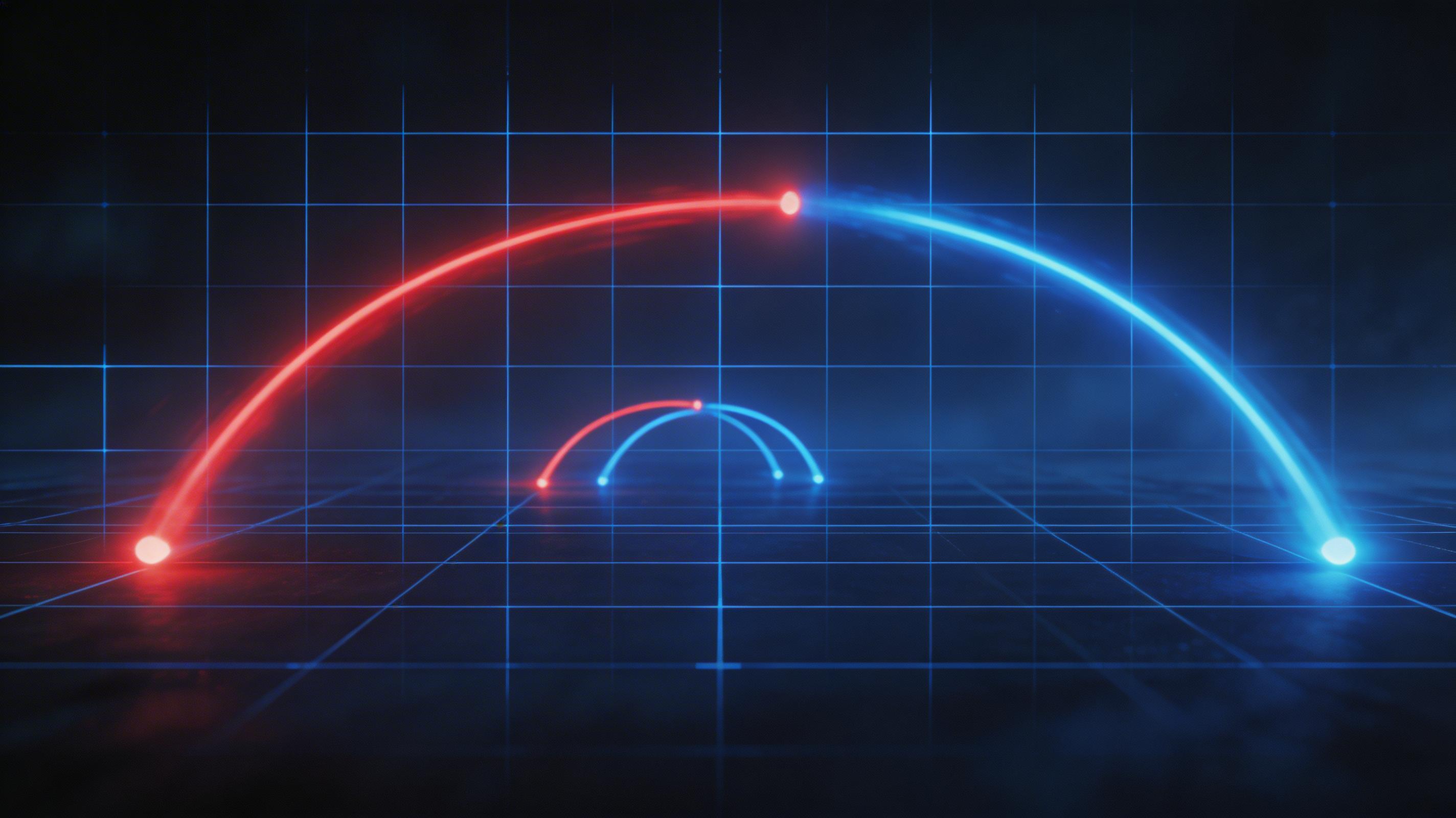
A crucial concept here is "Arc Optimization." While a flat shot is faster, it has a much smaller "Entry Window" at the target. A higher, more parabolic arc increases the effective size of the hoop or goal, providing a larger margin for error. Pro players use "Apex Targeting" to visualize where the highest point of the shot should be, rather than just looking at the target. This "Indirect Aiming" is a hallmark of elite shooters. In 2026, many shooters include "Adaptive Gravity" that changes based on the environment; mastering these "Environmental Shifts" is key to consistent performance. You aren't just aiming at a point; you're aiming at a "Geometric Probability."
Advanced players also account for "Magnus Lift." If the simulation includes spin, the ball will experience a force perpendicular to its path. This can be used to "float" a shot over a defender or "dip" a ball into a tight corner. Understanding the "Spin-Velocity Ratio" is essential for high-tier play in 2026's most realistic sports simulators. Every shot is a conversation between your input and the air itself.
2. Timing, Rhythm, and Cadence: Synchronized Execution
Beyond the initial release, shooting is a game of rhythm. Many modern shooters, like tap-tap-dunk, use "Timed Taps" to control the ball's elevation. The key here is "Cadence Management"—the ability to maintain a steady, predictable beat that aligns with the game's internal physics clock. When your internal rhythm matches the game's cadence, the simulation feels effortless; when it's off, everything feels sluggish and unpredictable. This is "Neural-Clock Syncing."
Expert players use "Visual Anchors"—fixed points on the screen like the rim's edge or a background landmark—to stabilize their timing. By releasing their shot when the target reaches a specific anchor point, they remove the need for reactive aiming. This "Predictive Execution" allows them to maintain high accuracy even under extreme speed. "Rhythm Calibration" involves taking a few slow, deliberate shots at the start of a session to sync your brain with the game's timing windows. For the pro, shooting is not a reflex; it's a "Synchronized Performance" where the player and the machine are one.
We also see the use of "Audio Cues" in 2026 titles. The sound of the ball hitting the floor or the net provides a rhythmic feedback loop that can be used to fine-tune your timing without even looking at the screen. "Auditory Targeting" is a high-level skill that allows elite players to maintain their cadence even during visual "glitch" events or high-speed transitions. The perfect shot has a sound, and once you learn it, you can reproduce it at will.
3. The Psychology of the Streak: Confidence Anchoring
Shooting is as much a mental game as it is a physical one. The concept of the "Hot Hand"—the feeling that you can't miss—is a powerful psychological state. Expert players use "Confidence Anchoring" to maintain this state. Every successful shot reinforces their mental model, while every miss is treated as a piece of "Neutral Intel" rather than a failure. This "Emotional Detachment" prevents them from "Choking" under pressure. The goal is to reach a state of "Mindless Precision."
Maintaining a streak requires "Pressure Mitigation." As the streak grows, the psychological weight of each shot increases. Pro players use "Reset Rituals"—small, consistent actions between shots, like a deep breath or a specific finger movement—to clear their mind and return to their baseline state. They also use "Micro-Goal Setting," focusing only on the very next shot rather than the total score. This "Process-Oriented Mindset" is what allows them to rack up hundreds of consecutive makes. In 2026, the mmm community uses "Neural Feedback" tools to monitor their focus levels, ensuring they stay in the optimal zone for high-performance shooting.
The "Flow State" is the ultimate goal. In this state, the player is no longer consciously "aiming." The brain has offloaded the physics calculations to the subconscious, allowing for a level of speed and accuracy that is simply impossible for a conscious mind. Reaching this state requires a high level of "Trust in the Simulation"—knowing that if you provide the correct input, the machine will provide the correct outcome. The streak is not a test of skill; it's a test of trust.
4. Advanced Tactics: Curve, Spin, and Reflection
Finally, we must address the "Trick Shot" mechanics that separate the masters from the amateurs. "Magnus Effect" (curve) and "Elastic Collisions" (bounces) add a layer of complexity that requires deep tactical thinking. In games like La_Football, curve is not a gimmick; it's a tool for navigating around defenders and keepers. "Vector Summation" involves combining the initial launch vector with a spin vector to create a complex, curved path that is difficult for opponents to predict.
Mastering bounces requires "Reflective Intuition." You have to be able to predict how the ball will behave when it hits a surface at a specific angle and speed. Pro players use "Surface Analysis" to identify which walls provide the most predictable bounce and which should be avoided. They use "Multi-Stage Planning" to set up shots that involve several bounces before reaching the target. This "Strategic Geometry" turns a simple shooter into a complex spatial puzzle. Visit our Sector Analysis to find the perfect shooting range and start your journey toward the perfect shot today. The simulation is waiting for your input.
In 2026, we also see "Material Interactions" where the ball's properties change based on what it hits. A "Power-Up Zone" might increase the ball's elasticity, while a "Slow Zone" might increase its drag. Mastering these "Dynamic Field Effects" is the final frontier of shooting mastery. By understanding how the environment modifies your vectors, you can pull off shots that defy traditional physics. The perfect shot is a work of art, but it is built on a foundation of pure science.
In the end, the perfect shot is not something you do; it's something you allow to happen by being perfectly in sync with the simulation. Master the math, trust the rhythm, and the swish will follow.