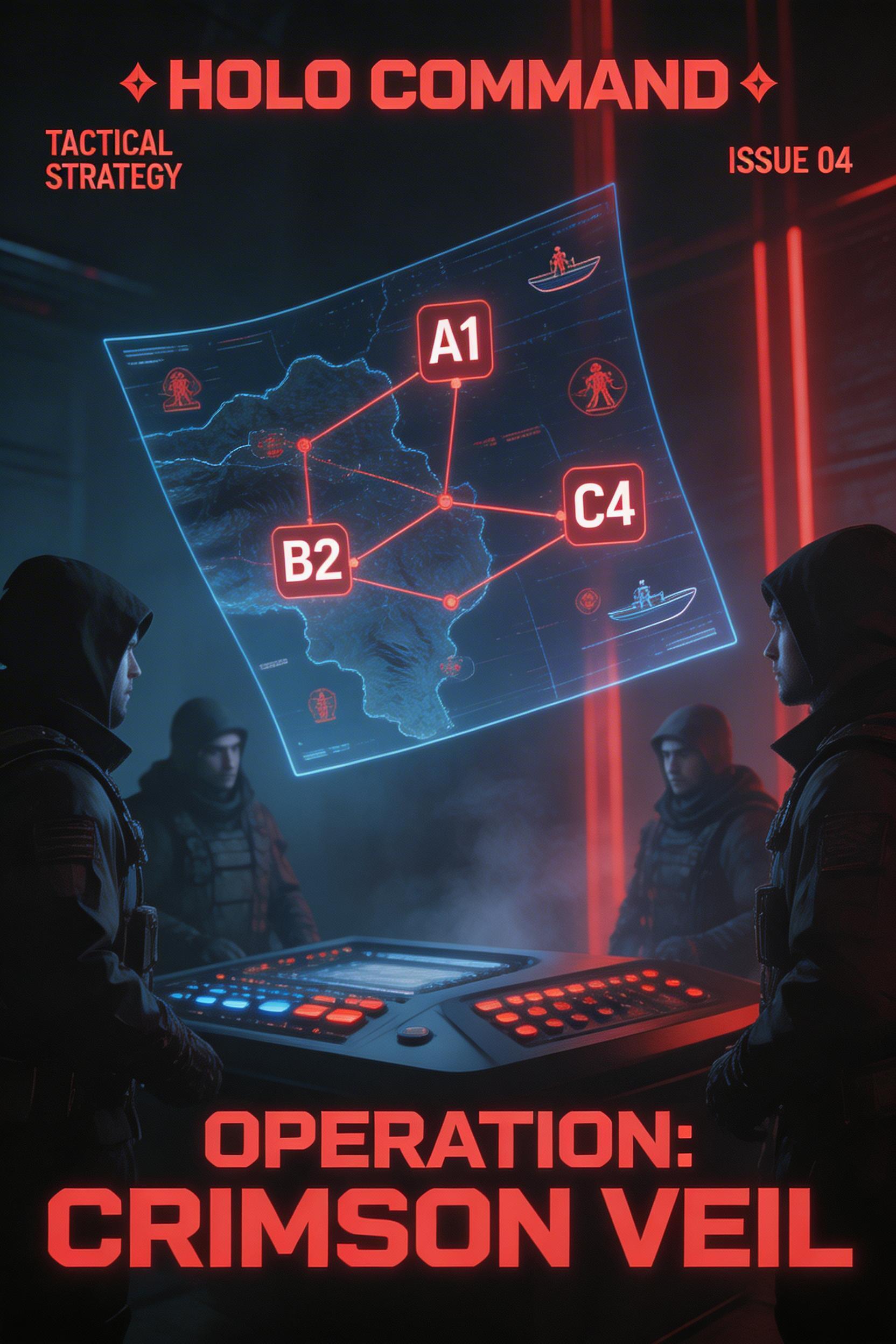
The landscape of browser-based strategy gaming has undergone a seismic shift in the last two years. No longer relegated to simple "click-and-wait" mechanics, modern experiences leverage complex physics engines, procedural generation, and deep resource management. As we look into 2026, the trend is clear: depth is the new king. This transition marks the end of the "Flash Era" echoes and the beginning of a truly native web gaming revolution, where performance and tactical complexity are no longer mutually exclusive.
1. The Rise of Procedural Complexity: Sector Sigma
At the top of our list is Sector Sigma, a game that redefines what a browser can handle. It's a grand strategy title that uses WebAssembly to simulate millions of agents in real-time. What makes it special is its approach to diplomacy. Unlike static AI, the factions in Sector Sigma respond to your trade patterns, military posture, and even your "soft power" projections. To succeed here, you need to think three turns ahead of a machine that is constantly learning from your mistakes. The game's engine, built on a custom Rust-based framework, allows for a level of detail previously only seen in high-end desktop simulations.
The core mechanic revolves around "Flux Management." You're not just building bases; you're balancing the energy output of various sectors while maintaining a supply line that can be easily disrupted by orbital anomalies. It's a game about risk mitigation. Do you overextend for a rare resource, or do you consolidate your power in a smaller, defensible perimeter? The 2026 edition introduces "Neural Bridges," allowing players to form temporary alliances that are bound by cryptographically secure smart contracts within the game world. This layer of social engineering adds a dimension of realism that is both exhilarating and terrifying.
Beyond the flux, players must also navigate the "Social Fabric" of their colonies. Every action has a ripple effect on the morale and productivity of your workforce. If you prioritize military expansion over resource distribution, you risk a sector-wide strike that could cripple your infrastructure at a critical moment. Sector Sigma is not just a game of conquest; it is a game of governance and sustainable growth.
2. Physics-Based Tactical Mastery: Kinetic Command
Kinetic Command takes the second spot. It's a game that proves strategy isn't just about spreadsheets; it's about understanding momentum. You control a squad of specialized drones in a zero-gravity environment. Every shot you fire has a counter-force that pushes your drone back. This creates a fascinating dance where positioning is everything. If you fire a heavy railgun without anchoring yourself to a nearby debris field, you'll find yourself spinning helplessly into the void. This "Newtonian Combat" requires a complete rethink of traditional dogfighting tactics.
Mastery in Kinetic Command requires a deep understanding of physics. You have to calculate trajectories not just for your projectiles, but for the recoil that will follow. The "Vector Prediction" engine in the 2026 update provides players with a visual ghost of their drone's future position, but it only accounts for known forces. A sudden explosion or a collision with a hidden asteroid can throw all your plans into chaos. This is strategy at its most visceral, where a split-second decision can be the difference between a tactical victory and a kinetic disaster.
The game also features a deep "Customization Matrix" for your drones. You can adjust everything from the thrust-to-weight ratio to the heat dissipation profile of your weapons systems. Each modification changes how your drone handles in the void, forcing you to recalibrate your muscle memory. Pro players often spend hours in the "Testing Range" just to feel out the nuances of a new engine configuration before taking it into a live sector analysis.
3. The Architecture of Resource Chains: Industrial Echo
In the third position, we have Industrial Echo. This is a "Merge-Plus" title, meaning it takes the familiar merge mechanic and wraps it in a complex industrial simulator. You're not just merging two gears to make a bigger gear; you're designing an automated factory where the output of one merge chain becomes the input for another. The complexity grows exponentially as you unlock higher tiers of technology. The 2026 version introduces "Dynamic Logistics," where the physical layout of your factory floor determines the efficiency of your resource transfer.
The true challenge of Industrial Echo is "Throughput Optimization." As your factory grows, you'll encounter bottlenecks that require you to redesign your entire layout. The 2026 version adds "Global Trade Hubs," where players can export their specialized components to other players' factories. This creates a global economy where your ability to produce high-tier components efficiently determines your standing in the industrial hierarchy. It's a game that rewards the meticulous architect and the visionary supply-chain manager.
The "Pollution and Regulation" layer adds another level of difficulty. As your production increases, so does your environmental footprint. In the 2026 update, failing to manage your waste can lead to "Global Sanctions" that limit your ability to trade on the open market. This forces players to choose between rapid, dirty growth and slow, sustainable development. It's a fascinating look at the trade-offs of industrialization, rendered in a clean, minimalist interface.
4. Psychological Warfare in Minimalist Grids: Grid Lock
Grid Lock, our fourth pick, is a masterclass in minimalist design. It's a simple 10x10 grid where you and an opponent take turns placing influence markers. The rules are simple: connect four markers to capture a quadrant. However, the psychological depth is immense. Because the game is perfectly balanced, the only variable is human error and the ability to bluff. It is the "Chess of the Cyber-Noir Age," stripped of all ornamentation to reveal the pure clash of wills.
Expert Grid Lock players don't play the board; they play the person. They'll set up elaborate "false fronts" that look like an aggressive push for a corner, only to pivot and capture the center at the last possible moment. The 2026 "Grandmaster Edition" features an AI that was trained on millions of high-level human matches, providing a training ground that is as frustrating as it is rewarding. It's a game where one mistake can unravel ten minutes of careful planning, and where the silence between moves is as important as the moves themselves.
The "Timed Match" mode adds another layer of pressure. Players have only seconds to analyze the board and commit to a move. This forces a transition from analytical thinking to intuitive pattern recognition. The best players in 2026 are those who can maintain their strategic composure while the clock is ticking down, relying on thousands of hours of "Mental Repetition" to guide their markers into the optimal positions.
5. The Evolution of Tower Defense: Nexus Defense: 2026
Rounding out our top five is Nexus Defense: 2026. Tower defense is one of the oldest genres in browser gaming, but Nexus Defense brings it into the modern era with "Active Terrain Modification." Instead of just building towers on pre-set paths, you can terraform the environment to create your own bottlenecks and kill zones. The enemies are smart, too; they'll try to find the path of least resistance and will even sacrifice weaker units to clear a path through your mines. This "Intelligence Gap" is the primary challenge of high-level play.
The strategy here is "Dynamic Response." You can't just build a perfect defense and walk away. You have to constantly adjust your towers to counter new enemy types. The 2026 expansion introduces "Synergy Cores," which allow towers of different types to share buffs and special abilities if they are placed in specific geometric patterns. It turns a game of defense into a game of intricate spatial puzzles, where the architecture of your kill zone is as important as the power of your weapons.
The "Endless Siege" mode is where the true masters are found. As the waves become increasingly complex and the enemies more resilient, players must leverage every available synergy and terrain advantage to survive. The 2026 global leaderboard for Nexus Defense is a testament to the community's ingenuity, featuring layouts that look more like complex circuit boards than defensive perimeters. It is the pinnacle of architectural strategy in the browser.
This concludes the first half of our 2026 tactical debrief. The remaining five titles on our list—ranging from abstract logic puzzles to high-speed momentum simulators—will be revealed in our next update. In the meantime, we encourage you to head over to our Sector Analysis and begin your own journey toward mastery. The era of deep strategy has arrived, and mmm is your command center.